
Web development services cover the end-to-end process of building websites and web applications from requirement gathering and architecture planning, through design, development, and testing, to deployment and ongoing maintenance. This includes static websites, dynamic web applications, eCommerce stores, CMS-managed sites, and custom web portals.
Web Development Company
If you are looking for a web development company that can build fast, secure, and scalable digital solutions, you are in the right place. At Softnoesis, we have been building custom websites and web applications for over 10 years delivering solutions for startups, growing businesses, and enterprises across healthcare, SaaS, eCommerce, fintech, and logistics.
We do not believe in building websites just for the sake of having an online presence. Our goal is to create websites and web applications that actively support your business by improving visibility, streamlining operations, increasing engagement, and supporting long term growth. From simple business websites to complex web platforms, every solution is designed with clarity, performance, and scalability in mind.
Web Development Services Built for Real Business Needs
Web development services include planning, designing, building, testing, and maintaining websites or web applications that support business operations and long term growth. Before we write any code, we take time to understand your goals, your users, and the role your website or web application plays in your overall business strategy.
Instead of relying on generic templates, we deliver custom web development solutions that align with your workflows, data requirements, and future plans. This approach ensures that your website or application remains useful, manageable, and scalable over time.
Custom Web Development Services
Our custom web development services are ideal for businesses that need flexibility, performance, and full control over functionality. As a custom web development company, Softnoesis builds tailored solutions that match specific business requirements rather than forcing features into pre-built structures.
Custom web development is the right choice when :
- •Your business needs unique features or integrations
- •Your website or app supports daily operations
- •Performance, security, and scalability are essential
- •You want long-term stability without frequent rebuilds
We focus on clean architecture, maintainable code, and solutions that grow with your business.
Web Application Development Services
Our web application development services help businesses automate processes, manage data, and improve efficiency. We build secure, scalable web applications such as dashboards, portals, booking systems, internal tools, and customer-facing platforms. Every application we deliver is production ready from day one built on battle-tested backend frameworks, connected through secure REST or GraphQL APIs, and deployed on cloud infrastructure with performance monitoring in place from launch.
Every web application we develop is designed to :
- •Handle increasing users and data
- •Integrate smoothly with third-party tools
- •Perform reliably under heavy usage
- •Support future feature expansion
This ensures your web application remains useful and efficient as your business evolves.
Website vs Web Application How to Choose the Right Solution
Many businesses struggle to decide between a website and a web application. Here is a simple way to choose:
Website
- •Best for presenting information, services, content, and brand presence
Web Application
- •Best for user actions, logins, dashboards, automation, and data handling
If your goal is visibility and communication, a website is usually enough. If your goal involves processes, users, and data, a web application is the right choice. We help you decide based on your business model, not trends.
As an experienced eCommerce website developer, we create online stores that are fast, secure, and conversion-focused. We specialize in platforms like Magento Development for enterprise-scale stores and WooCommerce Development for seamless WordPress integration. From product management to payment gateways and order workflows, our eCommerce solutions are built to support real sales growth.
Our eCommerce development focuses on :
- •Smooth user experience across devices
- •Secure checkout and payment handling
- •Scalable architecture for high traffic
- •Easy product and order management
Whether you are launching a new store or upgrading an existing one, we build platforms designed to sell and scale.
Website Design and Redesign
We work as a professional web designing company, focusing on usability, clarity, and performance. A well designed website should not only look good but also communicate clearly and guide users toward action. Whether you need a new website or a complete redesign, we ensure:
- •Clear structure and messaging
- •Fast loading pages
- •Mobile-friendly layouts
- •Improved user experience
Good design builds trust, improves engagement, and supports conversions.
Custom CMS Development Services
As a CMS web development company, we build content-managed websites that are easy to update and scale. We provide expert WordPress Development for businesses that need a user-friendly interface, as well as custom built CMS solutions for more complex requirements. Our solutions allow your team to manage content without technical complexity while remaining SEO friendly and flexible.
These solutions are ideal for businesses that want :
- •Full control over content
- •Easy page and media management
- •Scalable website structure
- •Long-term maintainability
Web Portal Development Services
We develop secure and scalable web portals for businesses that require role-based access, dashboards, and structured data management. These portals are commonly used for customers, partners, vendors, or internal teams.
Each portal is built with a focus on security, performance, and usability.
Landing Page Development Services
We design and develop landing pages optimized for speed, clarity, and conversions. These pages are ideal for marketing campaigns, product launches, and lead generation.
Our landing pages focus on :
- •Clear messaging
- •Fast load times
- •Simple navigation
- •Strong calls to action
Web Support and Maintenance
Our work continues after launch. We provide ongoing web support and maintenance to ensure your website or web application remains secure, updated, and performant.
This includes :
- •Performance monitoring
- •Security updates
- •Bug fixes and improvements
- •Feature enhancements
What to Look for When Hiring a Web Development Firm
Choosing the right web development company is critical for long-term success. Before hiring, businesses should evaluate:
Expertise
Experience with similar projects and technologies
Portfolio
Proven work across websites and web applications
Process
Clear development and communication workflow
Support
Reliable post-launch maintenance and assistance
At Softnoesis, we focus on all these areas to deliver reliable results and long-term value.
Why Choose Our Web Development Company
Businesses choose Softnoesis because every decision we make from technology selection to project communication is built around your business outcome, not our convenience.
Dedicated Developer Per Project
Every project gets a dedicated developer or team assigned from start to finish, not a rotating pool of resources. You work with the same people throughout, which means faster delivery, fewer handoff errors, and a team that deeply understands your product.
Custom Architecture, Not Templates
We do not force your requirements into pre-built themes or page builders. Every solution is architected from the ground up to match your workflows, data structure, and growth plans giving you full control without technical limitations.
Transparent Process With Documented Milestones
Before development begins, you receive a milestone-based project plan with clear timelines and deliverables. Sprint updates keep you informed throughout so you always know exactly where your project stands and what is coming next.
SEO-Ready Development From Day One
Every website we build follows a clean semantic HTML structure, optimized page speed, mobile-first responsive design, and proper heading hierarchy so your site is ready for indexing from the moment it goes live, not as an afterthought.
Long-Term Partner, Not a One-Time Vendor
Our average client engagement lasts beyond the initial project. We provide post-launch support, performance monitoring, security updates, and feature enhancements because a website's real value is measured over time, not at launch.
Full IP Ownership
All code developed during your project is your intellectual property upon completion. Your business data, code, and strategy remain fully confidential throughout the engagement.
Experience, Scale & Delivery Confidence
Web Development Technologies We Use
We choose technologies based on your business needs, not trends. The right technology stack ensures performance, security, and scalability.
Frontend Technologies
At Softnoesis, frontend development focuses on speed, usability, and consistency. Every frontend we build targets smooth navigation, fast load times, and cross-device compatibility.
Frontend Technologies we use include:
HTML5 and CSS3 — Semantic, accessible markup that gives pages a clean SEO friendly structure
JavaScript (ES6+) — handles interactivity, asynchronous data, and browser-side logic without heavy frameworks where not needed
React.js Development — component-based architecture that makes frontends faster to build, easier to maintain, and simpler to scale
Angular — chosen for enterprise applications that require strict TypeScript structure and modular architecture across large teams
Responsive frameworks — CSS Grid, Flexbox, and utility-first approaches for layouts that work correctly on every screen size
Backend Technologies
Backend systems power the logic and data handling behind your website or application. We build backend architectures that are secure, scalable, and future ready.
Backend technologies we work with include:
Node.js — event driven, non-blocking architecture that handles high concurrency applications and real time features efficiently
PHP with Laravel — We specialize in PHP Development using Laravel, a structured MVC framework with built-in authentication, ORM, and queue management for reliable transactional systems. We also provide CodeIgniter Development for lightweight, fast-performing web applications.
Python — used for data-driven applications, automation pipelines, and backends that need integration with AI or ML services
REST and custom APIs — the integration layer that connects your web application with third-party tools, mobile apps, and external systems
Databases & Data Management
Efficient data handling is essential for performance and security. Our database design ensures fast queries, secure storage, and easy scalability.
Databases we commonly use include:
MySQL — Reliable relational storage for standard web applications and content-managed platforms with straightforward data structures
PostgreSQL — Selected for complex systems that require advanced querying, large datasets, and high read/write performance
MongoDB — Document-based NoSQL storage for applications with variable or nested data structures, such as product catalogs or CMS-backed platforms
Cloud & Infrastructure
Modern web solutions require flexible and reliable infrastructure. Our cloud approach supports scalable server environments, automated backups and monitoring, secure deployments, and high availability and performance.
Our cloud approach supports:
AWS (Amazon Web Services) — our primary cloud platform; we use EC2 for compute, RDS for managed databases, S3 for storage, and CloudFront for global content delivery
Google Cloud Platform (GCP) — used where clients have existing GCP infrastructure or require specific Google-native services
CI/CD Pipelines — automated deployment workflows that ensure consistent, error-free releases from development through to production
Monitoring and uptime tools — real-time performance and availability monitoring so issues are caught before they affect your users
Web Development Services Built Around Your Industry Needs
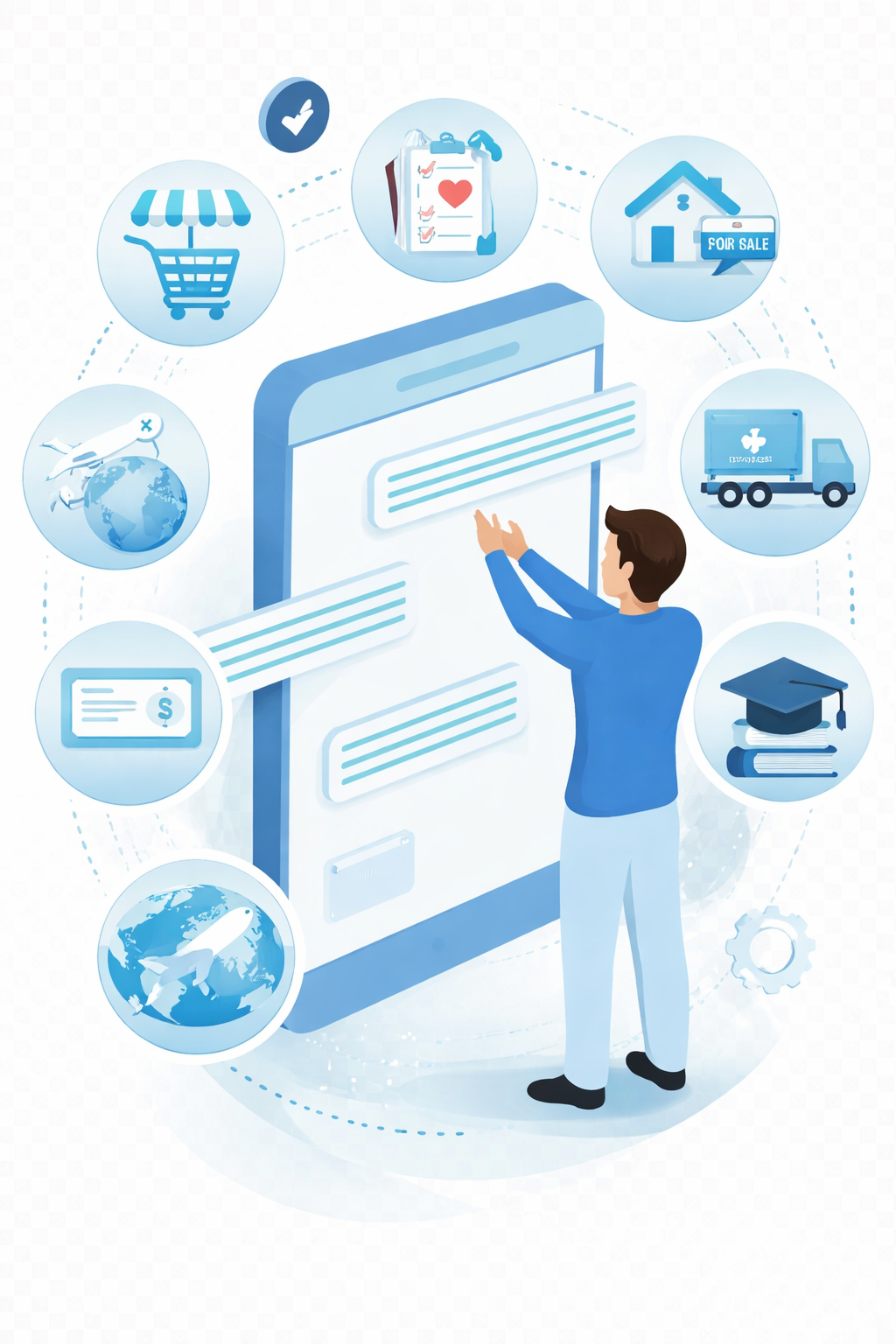
We provide web development solutions across industries where performance, security, and scalability are non-negotiable. Each solution is tailored to the operational realities of that sector.
Healthcare
Patient portals, appointment management systems, and secure data handling for clinics and health technology companies
E-Commerce
Custom storefronts, inventory and order management systems, and high-traffic platforms built to convert and scale
SaaS & Technology
multi-tenant web applications, subscription management dashboards, and API-first product development
Finance & Fintech
secure client portals, transaction dashboards, and compliance-aware applications with role-based access
Education
learning management systems, student and instructor portals, and content-managed course platforms
Logistics & Manufacturing
internal operational dashboards, shipment tracking portals, and ERP integrated web tools
Each solution is tailored to industry specific needs.
Our Web Development Process
Every project at Softnoesis follows a structured and transparent process so you always know what is happening, what is next, and what to expect at delivery.
Advanced Capabilities
Businesses Choose Softnoesis Because :
Custom software development
Cross Platform Development (Building apps that work on both iOS & Android)
Full stack development
CRM development
Mobile backend and APIs
MVP development
Software development outsourcing
Client Data Security & Engagement Transparency
Every client engagement at Softnoesis starts with a signed Non-Disclosure Agreement (NDA) and a clear project contract that defines scope, timelines, and deliverables. All code produced during your project is your intellectual property upon full payment.
Development work takes place in access-controlled, private repositories. We do not share client code, data, or business information with third parties. For clients in regulated industries such as healthcare and finance, we incorporate sector-appropriate data handling practices from the start of the project.
Our communication process includes regular progress updates, sprint reviews, and direct access to the team throughout development. You always know where your project stands
FAQs – Web Development Services
What are web development services?
What services does a web development company offer?
Will AI replace web developers?
Which company is best for web development?
Why should I hire a web development company instead of building it myself?
How much does it cost to hire a web development company?
How do I know my data and code will be protected?
Hire a Professional Web Development Company
If you are ready to hire a web development company that delivers scalable, secure, and business-focused solutions, Softnoesis is here to help. Whether you need a website, a web application, or a complete digital platform, we build solutions designed for performance and growth.
When you reach out, our team will schedule a free requirement analysis call typically 30 to 45 minutes where we understand your goals, ask the right questions, and give you an honest assessment of scope, technology, and timeline. No obligation, no generic proposal
Talk to our experts today and discuss your web development requirements. →